Plissage et Fleur 1 (Pleats and Flowers)
Hello, I'm Lune.
How are you all doing?
This time we'll be talking about the behind-the-scenes story of pleating.
Lune's pleated model dates back to the launch six years ago. At the time, we were preparing as a small brand that mainly sold pants, and on that day we had a meeting with Lune's PR. The PR suggested, "Wouldn't it be great if there were tops that matched all of Lune's pants?" This was the beginning of the blouse project.
The first one is a white dress shirt with a black tie for a SMOKING style.
The second piece is a feminine blouse. I wanted something that was made of sheer material, had volume and drape, and was light and easy to wear and care for. Gathering would be too cute, and pin tucks would be too stiff. I wanted something with a fragrant, sexy quality...
Maybe pleats would be good?
I immediately consulted with a pleating factory and began meetings based on the factory's pleating materials, my personal vintage blouse, and various other materials. After coming up with options for pleat type, pitch, texture, and material, and making several prototypes, I decided on adding crystal pleats and removal (a technique in which the pleats are removed halfway through) to a silky vintage chiffon.
I have created the feminine blouse with the nuance I was looking for.
How many prototypes did you make?
My first pleated blouse was made thanks to the factory that worked with me until I was completely satisfied. It was the first piece that taught me the depth of pleating and the joy of seeing the finished product. These blouses are now available in a wider range of colors, and I continue to make them in a variety of plain and printed fabrics.
 Lune classic blouse
When creating a pleated model, the very important steps are selecting the fabric, creating swatches (pleating the candidate fabric to test or experiment), deciding on the pleats, and deciding on the design.
(Of course, the pattern, sewing, and finishing are also very important. It's a long, long way to reach the goal, so here I'll talk about how I got to the design decision.)
Once you have chosen the fabric, you can begin creating swatches. Even if you use the same fabric, you can create completely different textures by combining different pleats, such as vertical pleating or bias pleating, depending on the combination. It's a deep process...
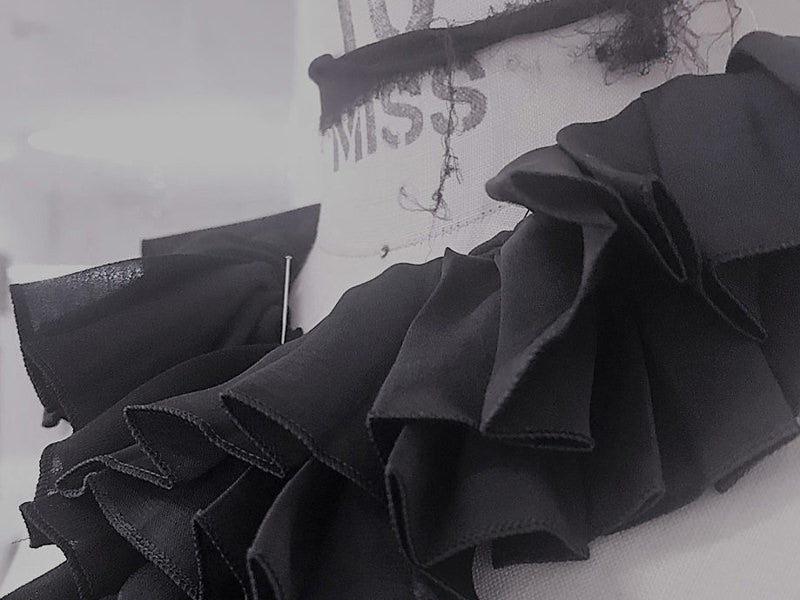
When the various swatches arrive at the atelier, the experimentation begins: wrapping them around the body, pleating them, bunching them, moving them, and seeing what new textures will emerge.
 Swatches
To be continued next time...